
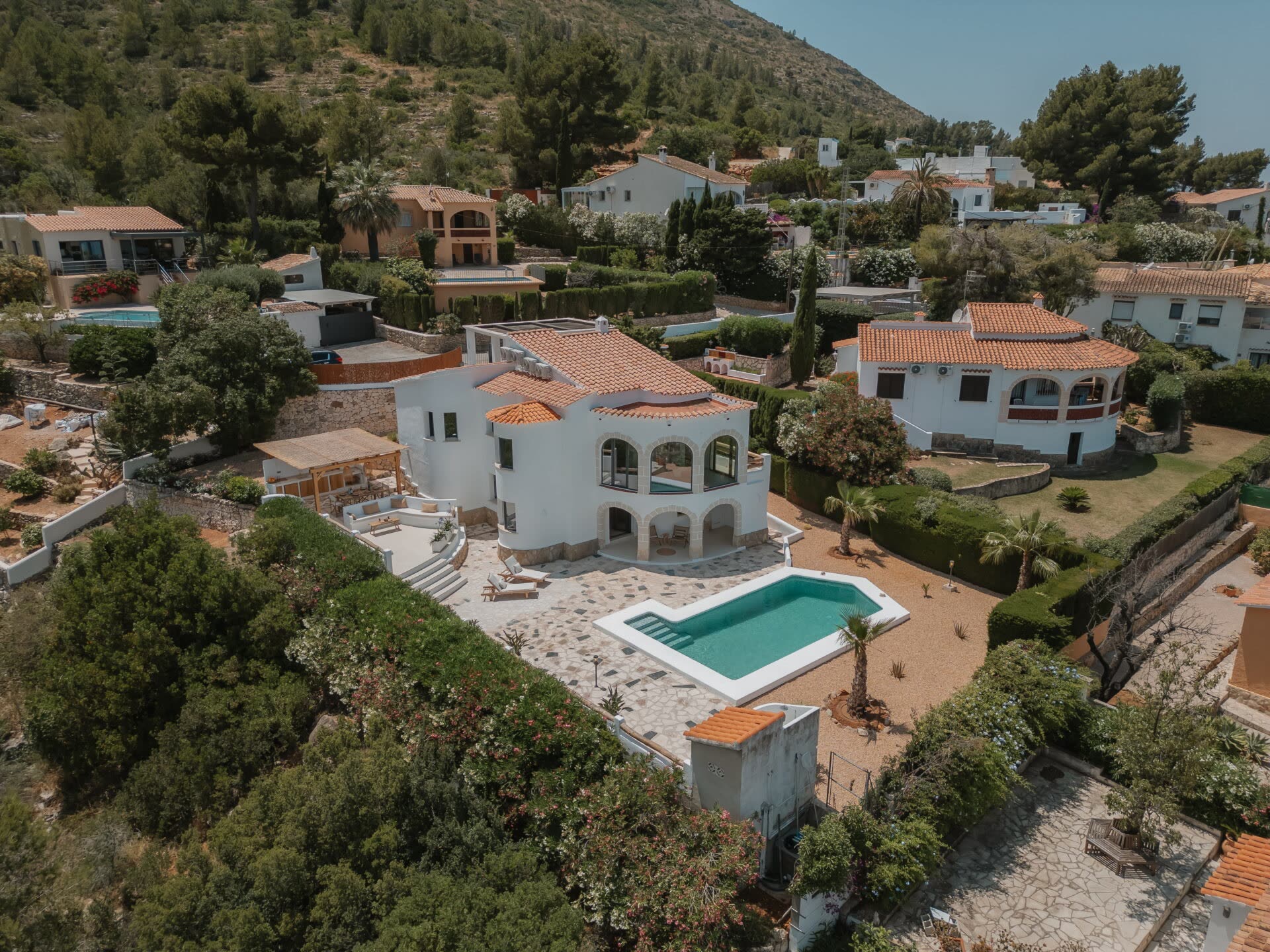
When most people think of the Costa Blanca, they picture Benidorm. High-rises, all-inclusive resorts, and a very particular kind of tourism. Head north past Altea and everything changes. The mountains get closer, the villages get quieter, and the coastline turns into something you didn’t think existed in mainland Spain. Here’s why the stretch between Dénia and Altea is where the interesting people end up — and why it’s still one of the Mediterranean’s best-kept secrets.
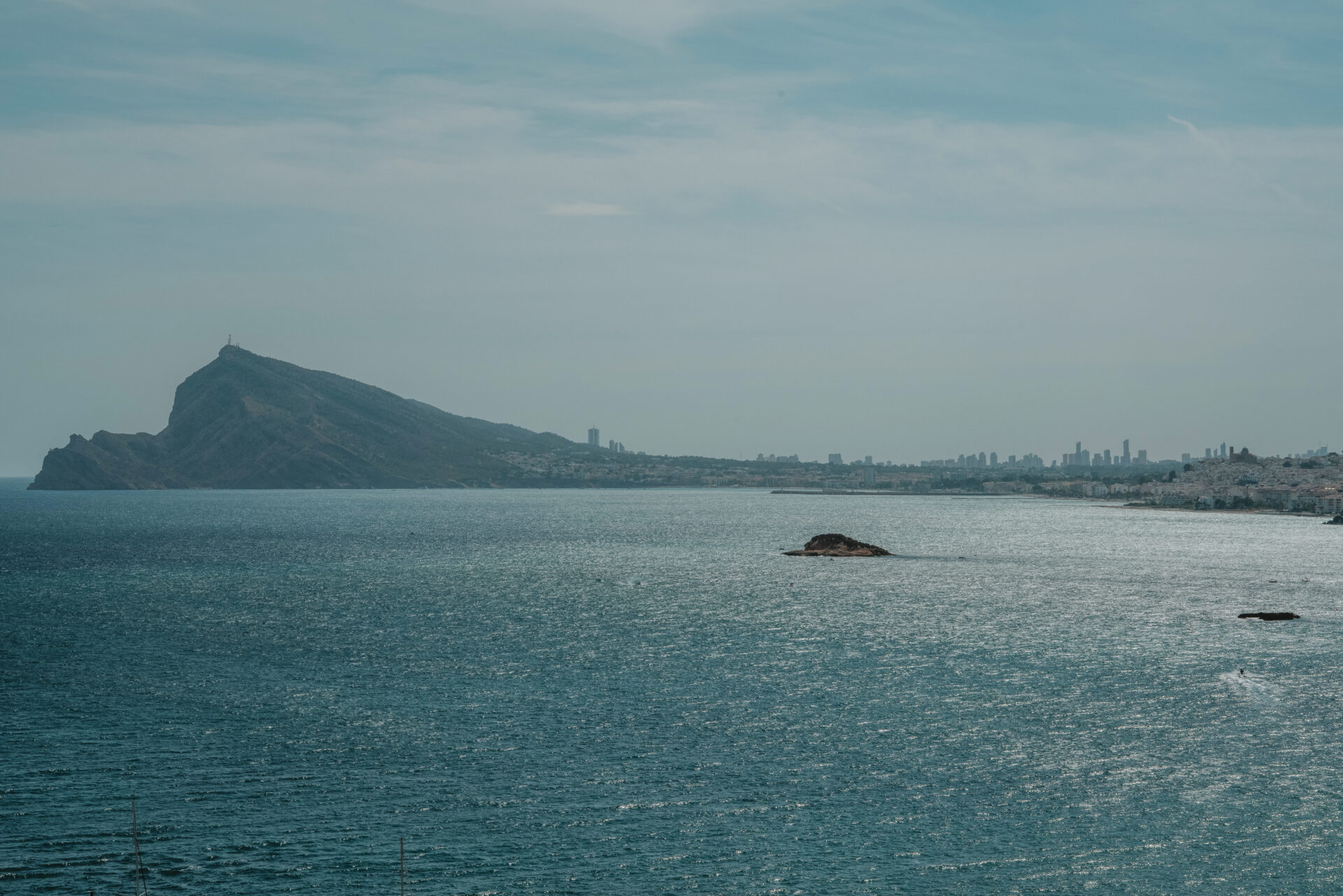
Costa Blanca North vs Costa Blanca South. Why we chose the north.
When most people start searching for property on the Costa Blanca, they begin with the same broad picture. Sun. Beaches. Palm trees. And often, Benidorm comes to mind first. Its skyline is iconic. Its energy unmistakable. And for many people, it offers exactly what they’re looking for: accessibility, sea views, and vibrant life by the Mediterranean.
But the Costa Blanca is larger, and more diverse, than most people realize.
The first time we drove beyond Benidorm, past Altea and further north, the landscape began to change. The mountains moved closer to the coastline. The roads became quieter. The scenery felt less shaped by tourism and more by time itself.
It wasn’t a dramatic moment. Just a quiet realization that this part of the Costa Blanca felt different.
The Costa Blanca North — stretching from Alicante to Denia — has a character that reveals itself gradually. Towns like Jávea, Moraira, and Denia don’t rely on scale or spectacle. They offer something more lasting: balance. Life here continues throughout the year. Restaurants stay open. Local communities remain active. It doesn’t feel seasonal. It feels permanent.
Jávea, for example, sits between the sea and the Montgó mountain, creating its own microclimate. Moraira has managed to preserve its identity as a coastal town, where mornings still begin quietly at the harbour. Denia brings together everything — coastline, history, gastronomy, and a year-round energy that attracts people who aren’t just visiting, but living.
Further inland, the Jalón Valley adds another dimension entirely. Vineyards. Open landscapes. Villages where time moves differently. All within reach of the sea.
The geography of the Costa Blanca North plays a defining role. The presence of mountains creates more variation — cooler evenings, greener surroundings, and a coastline shaped by bays and cliffs rather than long, uninterrupted stretches of sand. It gives the region a sense of depth, both visually and in lifestyle.
This diversity is one of the reasons why so many international buyers looking to buy property in Costa Blanca North ultimately focus their search here. Not because it’s better than the south, but because it offers a different kind of living experience. One that feels less transient, and more rooted.
We often tell clients that choosing between Costa Blanca North and Costa Blanca South isn’t about right or wrong. It’s about alignment. Some people are drawn to the openness and accessibility of the south. Others find themselves returning, again and again, to the smaller towns and layered landscapes of the north.
We recognized that feeling ourselves. Somewhere between Altea and Denia, what started as exploration turned into familiarity. The roads became known. The places became part of our routine. And without realizing it, this stretch of coastline stopped being a destination and became home.
Today, when we help clients explore property in Costa Blanca North — in Jávea, Moraira, Denia, or the surrounding areas — we’re not just showing locations. We’re helping them discover which place resonates with them personally.
Because ultimately, the Costa Blanca isn’t one place.
It’s many. And sometimes, the right one is simply the one that feels right when you arrive.